There was a time when exterior vacation lights stayed in storage space containers for eleven months of the year. Property owners dragged out twisted strings in late fall, climbed up ladders in cold weather, changed burnt bulbs, and loaded whatever away once again sometime after New Year's. That cycle still exists, yet it is losing ground to something extra sensible and, frankly, more useful all year long: Irreversible Vacation Lights.
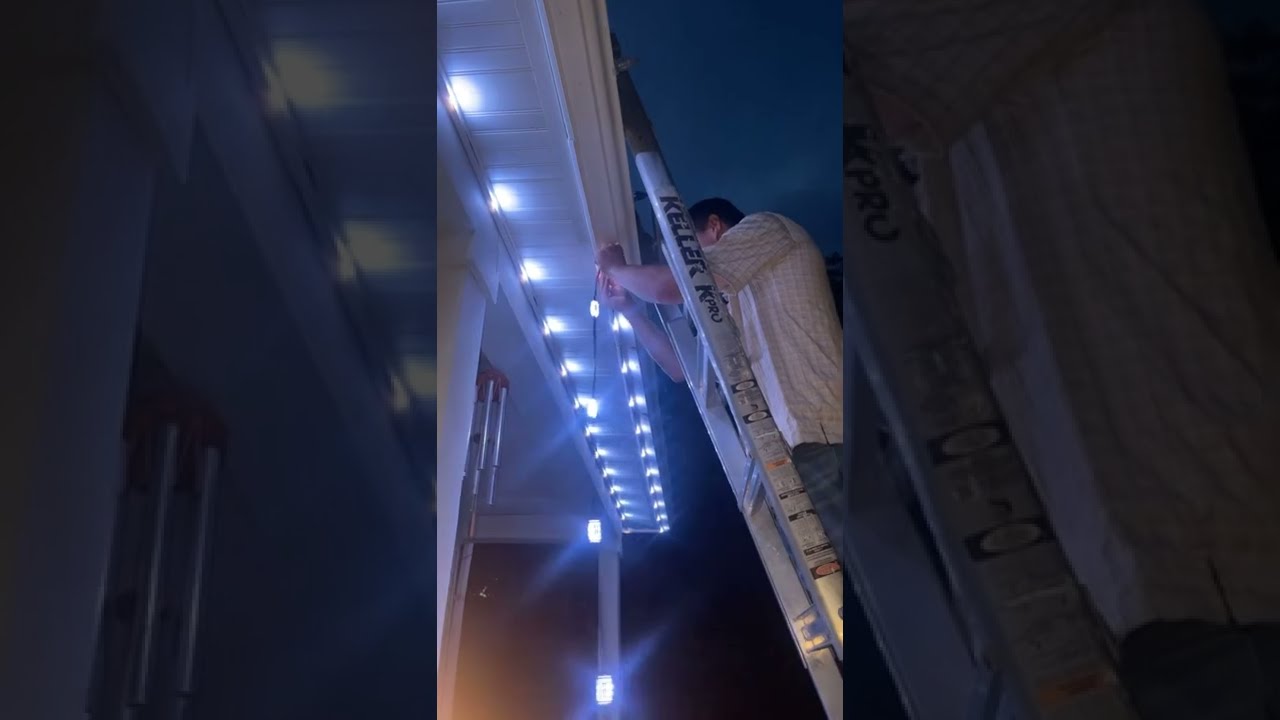
What started as a seasonal comfort has actually come to be a smarter classification of outside lights. The best systems no longer offer only December visual appeal. They work as building accent lights, security illumination, event lights, game day illumination, and refined daily lighting. When picked and installed well, they can make a home appearance much more completed on a regular Tuesday in April than a short-lived strand ever before did on Christmas Eve.
That change matters since home owners are asking more from exterior lighting than they made use of to. They want something clean, sturdy, energy-efficient, and very easy to manage. They additionally want lights that suits your house itself, not just the calendar. That is where irreversible systems have an advantage. They are designed to go away when not being used, yet supply a variety of impacts when activated.
Why these systems moved beyond the holidays
The greatest mistaken belief about irreversible lighting is right there in the name. Individuals listen to "vacation lights" and picture red and green scenes, flashy patterns, and a roofline that only makes sense in December. In method, most homeowners make use of these systems far more typically for non-holiday settings.
A permanent lights system rests discreetly along the roofline, soffits, fascia, trim, or other architectural lines. Throughout the day, a quality setup is hard to observe. At night, it can highlight the form of the home in a way that feels refined rather than temporary. That alone offers it a location past the holiday season.
The demand has actually additionally grown due to the fact that today's LED systems are much more polished than older attractive lighting. Brightness can be readjusted. Shades can be tailored. Schedules can be configured. Whole scenes can be saved and recalled from an app. This transforms a once-a-year task into component of the home's more comprehensive exterior lighting plan.
I have actually seen house owners begin the discussion intending to avoid climbing up ladders every winter months, after that realize the bigger worth is not seasonal benefit at all. It is control. They can establish a soft amber glow for nights on the patio area, switch to group colors for a watch celebration, usage patriotic themes for summertime vacations, and return to downplayed cozy lighting the following night without touching a solitary clip or extension cord.
The everyday case for irreversible lighting
The best disagreement for long-term systems is not novelty. It is convenience paired with restriction. Utilized well, the lights support the home instead of control it.
For day-to-day usage, numerous families favor subtle scenes. A crisp white line under the soffits can make a dark frontage feel safer and extra inviting. A low-brightness setting can brighten entry factors enough to help visitors find the front door without relying upon a rough flood lamp. In areas where building lighting matters, this can be a cleaner aesthetic selection than wall-mounted place fixtures.
There is also a practical side for family members. Exterior illumination commonly needs to do numerous jobs at once. It should assist with visibility, give your home a lived-in appearance when homeowners are away, and produce sufficient ambience for outdoor time without transforming the building into a stadium. Long-term LED systems can deal with those completing demands far better than many temporary setups.
The keyword phrase right here is moderation. Not every home benefits from saturated color every night. Actually, one of the most appealing uses Permanent Holiday Lighting is frequently the least theatrical one: soft, warm boundary illumination that quietly traces the home's lines. Many property owners especially request Classic Cozy Soft Lights since they want the appearance of a clean house, not an irreversible party. That choice is one factor these systems have become extra accepted in higher-end areas and on homes with traditional architecture.
Design matters more than the app
Manufacturers placed a lot of advertising focus on app control, shade libraries, and predetermined scenes. Those features serve, however they are not what makes a system successful. The real examination is just how the setup looks when the lights are off, exactly how well balanced the outcome feels when they are on, and whether the layout fits the structure of the home.
An excellent lighting strategy values building rhythm. Gables, eaves, comes to a head, columns, and entrance features all engage in a different way with light. On some homes, a complete roofline installment develops the best result. On others, a partial layout concentrated on the front altitude looks much much better and costs less. Much more lights do not automatically mean a better result.
I have seen basic installments surpass larger ones since the installer understood sightlines. A two-story home on a narrow lot might benefit from cleaner upper lines and a restrained front-facing style. A broad ranch residence with deep soffits might require tighter spacing and mindful illumination calibration to stay clear of a dotted look from the road. Those information determine whether the home looks sophisticated or overlit.
That is why Permanent LED Lights Setup should be dealt with as a design-build service, not simply a product purchase. The system itself matters, but positioning, placing method, wire monitoring, and programming make the distinction in between "set up lights" and "integrated lights."
Where irreversible vacation lights shine year-round
Homeowners have a tendency to find the value of long-term lights via the real world, not via an attribute checklist. Once the system is in area, the uses increase nearly on their own.
- Everyday aesthetic appeal with cozy, low-output architectural lighting Hosting support for yard dinners, birthdays, and community gatherings Seasonal decorating without clips, ladders, or electrical outlet overload Security-minded organizing that provides the house an occupied look Personalized scenes for sporting activities occasions, graduations, and neighborhood celebrations
Each of those usages appears basic, but the collective impact is substantial. Exterior lighting no longer ends up being a task that comes from one month. It becomes part of how the home functions.
One home owner I worked with originally warranted the investment due to the fact that they were tired of paying yearly to hang short-term lights on a steep roof. A few months after installation, they informed me the vacation function had actually currently come to be second. Their favorite setting was a dark cozy white scene that ran instantly from sunset up until 10 p.m. It made your house feel finished, improved exposure around the driveway, and looked great in every season. December was still fun, yet the various other eleven months were where the worth truly showed up.
Warm white is usually the most previously owned color
The market likes to advertise lively RGB screens, and there is certainly a place for them. Yet in lasting use, numerous homeowners resolve right into one of the earliest lighting impulses there is: cozy, complementary light simply looks great on a house.
Classic Cozy Soft Lights work specifically well on block, all-natural stone, painted house siding in low-key tones, and traditional trim details. They soften shadows and enhance landscape design instead of competing with it. They additionally tend to be extra neighbor-friendly. Brilliant shade computer animations may be interesting for a celebration or holiday weekend break, but a cozy static radiance is what many individuals in fact intend to live with.
There is a sensible factor for this preference as well. White equilibrium impacts perceived top quality. Cooler temperatures can make a home show up plain or somewhat industrial, especially if the LEDs are too intense. Warmer tones are more forgiving. They create deepness without squashing the facade. On older homes, this can be the distinction between enhancing personality and washing it out.
That does not mean color is wasted. Far from it. The point is that long-term systems are toughest when they can relocate easily between meaningful and understated settings. A home ought to have the ability to celebrate on Saturday and look calm and fine-tuned on Monday.
Installation high quality is where the investment is won or lost
An irreversible system is just comparable to the means it is installed. This is where numerous property owners undervalue the job. They contrast items on brightness or application screenshots and ignore the fundamentals that establish efficiency over time.
Mounting technique issues. So does cable cover-up. So does climate resistance at every link point. Rooflines increase and agreement with temperature level. Wind, rainfall, sun exposure, and particles all work against outside elements throughout the years. If a system is connected badly or routed carelessly, you will certainly see it in drooping lines, visible cabling, very early failings, or irregular color output.
Clean placement under the drip edge or along soffit channels typically produces a much more incorporated appearance than revealed clip-on methods. The installer additionally needs to make up access to power, controller placement, and future serviceability. A controller mounted in a practical, secured place is simpler to repair than one buried in an uncomfortable edge of the attic with bad air flow and erratic signal.
Brightness zoning should have focus too. A front-facing peak might require various settings than reduced eaves. Without thoughtful programs, one part of the house can show up balanced while another looks extremely intense. Excellent installers account for this from the first day rather than handing the issue to the house owner later.
In the area, the cleanest tasks generally come from groups that ask a great deal of questions prior to they begin. They want to know just how the house owner amuses, whether they like refined or vibrant scenes, what bordering homes appear like at night, and which architectural lines matter a lot of. That examination procedure is not sales fluff. It is part of the design work.
Cost, value, and the math home owners in fact use
Permanent lighting is not a minor impulse acquisition, and it must not be gone over as though it were. Expenses vary extensively based upon roofline intricacy, story height, regional labor rates, control attributes, and the quality of the hardware. Some homes might be on the lower end of a couple of thousand bucks, while larger or more complex residential properties can climb much higher.
The helpful comparison is not simply versus one box of short-term lights from a retail store. It protests the repeated annual price of setup, maintenance, storage inconvenience, substitute hairs, and house owner time. For households that have paid for seasonal dangling time after time, the math can end up being convincing earlier than expected.
There are additionally softer types of value that issue in the real world. Discover more Minimized ladder usage is not a little problem, particularly for older homeowners or residences with hard roof covering geometry. Less mess in the garage issues. So does the capability to year round permanent led lighting transform the appearance of your home for an event in thirty seconds as opposed to investing an afternoon untangling cords.
That claimed, not every building needs a full long-term system. If a home owner only embellishes lightly every few years and has no rate of interest in year-round accent illumination, the return might be much less engaging. Profundity indicates confessing that as well. The innovation is flexible, however it is most beneficial when the proprietor intends to use it regularly past major holidays.
Common mistakes that make irreversible lights look cheap
The paradox of permanent illumination is that it can either raise a home or make it look more temporary than a seasonal setup. Generally the difference boils down to a few avoidable mistakes.
Over-brightness is one of the most typical one. People typically think that more outcome equals a lot more influence. From the road, it usually means glare, locations, and shed information. Exterior illumination must expose kind, not eliminate it.
The second mistake is utilizing every available color since the system can. A home is not an amusement park. Saturated shade can be effective in other words ruptureds, yet continuous visual noise frays quickly. This is specifically real in areas where homes rest close together.
The 3rd error is bad line selection. Tracing every edge of a roofline without taking into consideration proportion can make a house look hectic. In a lot of cases, highlighting the toughest architectural shapes creates a far more refined result.
The fourth is getting based on application features alone. A glossy user interface can not offset weak diodes, irregular spacing, or a visibly messy install. The equipment and craftsmanship still come first.
Questions worth asking prior to you employ an installer
- How will certainly the system look in daytime when the lights are off? What cozy white alternatives are readily available, and can illumination be zoned by area? How are wires concealed, secured, and protected from weather exposure? What occurs if an area falls short, and exactly how is solution handled? Can you reveal examples of homes with a comparable roofline and style?
Those inquiries disclose a great deal. A strong installer will certainly answer them pleasantly and particularly. They ought to be able to chat with mounting details, power administration, controller access, and practical expectations for upkeep. If the conversation stays at the degree of colors and phone controls, you are not yet discussing the components of the project that matter most.
Neighborhood context and good taste
Permanent lights feed on personal homes, however they still connect with a common streetscape. This is one location where proprietor judgment counts. Even if a system can run computer animated multicolor patterns nighttime does not imply it should.
Tasteful use tends to win long-lasting contentment. In lots of communities, one of the most admired installments are the ones people hardly observe till evening drops. The home looks crisp and welcoming, not loud. Then, when a vacation or event occurs, the same system becomes meaningful for a minimal time.
This balance issues for resale assumption also. Customers may not react well to something that feels excessively customized or hard to handle. They are more probable to appreciate a system that provides as tidy architectural illumination with adaptable seasonal choices. That mounting makes the attribute feel helpful as opposed to niche.
Homeowners associations also come into play. Some neighborhoods have regulations regulating brightness, timing, shade usage, or visible exterior modifications. A top quality installer will usually flag these factors to consider early, however it is constantly sensible for property owners to inspect before job begins.
Maintenance is lighter, not nonexistent
One of the selling points of Long-term Holiday Lights is lowered upkeep, which holds true. Reduced is not the same as absolutely no. Exterior systems still live outdoors, and anything outdoors calls for periodic attention.
Controllers may need software application updates. Links must be checked if a section behaves inconsistently. Debris and hefty climate can impact parts gradually. On homes bordered by mature trees, maintaining gutters and roof edges tidy assists secure the installment atmosphere. None of this is specifically hard, however it needs to be expected.
The excellent information is that maintenance is normally much less discouraging than the annual routine of unpacking, testing, hanging, and replacing short-lived strands. When an irreversible system is mounted expertly, a lot of the effort has actually already been addressed at the framework level.
A better method to consider the category
It aids to stop thinking about permanent lights as designs that occur to stay up all year. That structure understates what they have actually become. A better way to think about them is as an adaptable outside lights system with a seasonal personality.
That distinction changes how house owners choose. Instead of asking just whether the lights will look excellent in December, they begin asking how your home must really feel in August, on a stormy weeknight, throughout a backyard supper, or while they are away for the weekend break. Those are more useful questions, because they reflect how the home is actually lived in.
When irreversible lights is picked keeping that wider purpose in mind, the financial investment begins to make sense. It adds ease, yes, yet additionally uniformity. The house can feel finished, inviting, and adaptable on a monthly basis of the year. And when the holidays get here, the celebration is currently integrated in, no tangled storage space bins required.